
Description
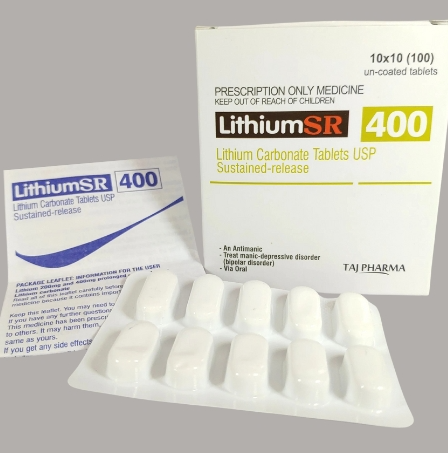
Lithium SR 400: Uses, Benefits, Safety and Important Info
Lithium is a drug that doctors prescribe for bipolar disorder, mania and some recurrent mood disorders. Because lithium has a narrow therapeutic index, patients must be medically monitored and have periodic blood tests while taking the drug.
What Does Lithium SR 400 Do?
Lithium SR 400 usually means a 400 mg slow- or modified-release lithium carbonate tablet. The slow release formulation releases the medicine slowly. So it should be taken exactly as prescribed. Extended-release lithium tablets should be swallowed whole, not crushed or chewed.
### What is Lithium SR 400 used for?
Doctors often prescribe lithium to help stabilise mood. It can help control manic episodes and help prevent future manic episodes that are related to bipolar disorder. In some cases, specialists may prescribe lithium together with other treatments for recurrent depression that has not responded adequately to other medications.
Also, lithium treatment may take time before its full effect can be seen. So the patients should follow the treatment plan prescribed by their doctor and should not change the dose themselves.
How to Take Lithium SR 400?
Take Lithium SR 400 exactly as your doctor has told you to. Keep the timing same everyday. Also, do not change between different lithium formulations or brands without medical advice, as different products may be absorbed differently.
The doctor may adjust your dose depending on your symptoms, the amount of lithium in your blood, how well your kidneys are working, your age, and other medicines you take.
What do blood tests mean?
“Regular blood tests are one of the most important aspects of lithium treatment. Your health care professional checks your lithium level to make sure it is in the right range. You may be tested frequently at first; once your levels have stabilised, you’ll generally be monitored every few months.
Doctors may also check kidney and thyroid function for long-term treatment.
Potential Side Effects
Some people get nausea, diarrhoea, dry mouth or a metallic taste. But too much lithium is dangerous. You may experience warning signs such as severe nausea or diarrhoea, blurred vision, unusual thirst, excessive urination, confusion, drowsiness or significant shaking.
If you suspect you have lithium toxicity, or have taken more than your prescribed dose, seek immediate medical attention.
IMPORTANT SAFETY INFORMATION
Don’t stop taking lithium suddenly without talking to your doctor. Stopping treatment suddenly may increase the risk of your symptoms returning. Tell your doctor or chemist about all the medicines and supplements you use. Some medicines can interact with lithium, such as NSAID painkillers, diuretics and some other medicines.
Also, continue to drink and eat your normal amounts of fluids and salt unless your health care provider tells you otherwise. Anything that alters hydration or sodium balance can affect lithium levels.
Frequently asked questions.
### Is Lithium SR 400 a mood stabiliser?
Yeah.” Lithium is a classic mood stabiliser especially in bipolar disorder and mania.
Can I crush Lithium SR 400?
Swallow the extended-release tablets whole. Do not crush, chew, or break these unless your health care provider tells you to do so.
Can I buy Lithium SR 400 without a prescription?
Lithium is a prescription drug and should only be taken with medical supervision.
Can I stop lithium once I feel better?
“No. Discuss stopping treatment with your doctor before you stop. Lithium usually needs to be tapered off rather than stopped abruptly.
Conclusion
When prescribed and monitored properly, Lithium SR 400 can be an important part in the management of mood disorders. It needs to be given in the right dose though and your blood will need to be tested regularly. You will also need to be careful that it does not interact with any other medicines you may be taking and watch for signs of toxicity. Therefore, only take lithium under the guidance of a qualified health care professional.
Reviews
There are no reviews yet.