
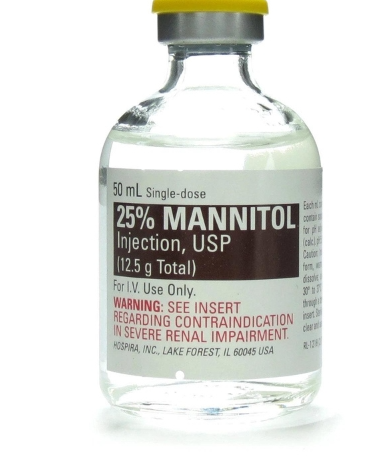
Description
Mannitol IV serves various medical purposes. It helps reduce intracranial pressure and treats conditions like acute kidney failure. Additionally, it aids in the management of certain types of oedema.
Mannitol IV serves as an intravenous medicine. It belongs to a group of medicines called osmotic diuretics. Health care professionals use it in some medical situations to help lower pressure inside the brain or the eye. Medical personnel should administer it and monitor it carefully, as it can dramatically impact fluid balance and kidney function.
IV Mannitol is a medication used primarily as an osmotic diuretic. It helps to reduce intracranial pressure and treat conditions like cerebral oedema. This medication is administered intravenously and works by drawing fluid out of tissues and into the bloodstream, promoting urine production.
Mannitol IV delivers mannitol directly into a vein. It increases the osmotic concentration of fluid in the blood and kidneys. It promotes the movement and excretion of water through urine. Clinicians may use it when medically necessary to reduce certain types of excessive pressure.
Mannitol IV serves various medical purposes.
Indications for Mannitol IV include the reduction of increased intracranial pressure and cerebral oedema. It is also indicated for the reduction of elevated intra-ocular pressure. It can therefore be considered by doctors in carefully selected patients when rapid pressure reduction is necessary.
Mannitol is not suitable for all patients, however. First, the healthcare professional should evaluate the patient’s overall condition, kidney function, fluid status and other relevant factors.
### How Does Mannitol IV Work?
Mannitol increases the osmotic pressure of the blood and the filtrate in the kidneys. This results in increased excretion of water by the kidneys, producing an osmotic diuretic effect. This shift in body water may be of benefit in lowering some types of pressure within the cranium or eye.
The effect can alter fluids and electrolytes, so health care providers monitor patients during therapy.
Administration and Monitoring
Mannitol IV is for intravenous administration. The prescribing information recommends assessment of renal, cardiac, and pulmonary status before therapy and correction of significant fluid or electrolyte problems. The exact dose, concentration and rate of infusion depend upon the patient’s age, weight, condition, urine output and other therapies.
Therefore, patients should not self-manipulate or change the dose of a mannitol infusion.
Important Safety Information
In some patients who take mannitol serious complications can occur. Kidney problems, fluid and electrolyte imbalances, allergic reactions and central nervous system toxicity have been reported, for example. Therefore, kidney function, urine output, electrolytes, serum osmolarity, and heart and lung function may be monitored by health care professionals during treatment.
Contraindications to mannitol include known hypersensitivity to mannitol, anuria, severe hypovolemia, pre-existing severe pulmonary congestion or pulmonary oedema, and active intracranial bleeding except during craniotomy.
Potential Side Effects
Side effects depend on the condition of the patient and the amount given. Serious reactions can include fluid and electrolyte imbalance, kidney problems, irritation at the infusion site, hypersensitivity reactions, and neurological symptoms. If it is serious, complications can occur that require immediate medical attention.
That’s why Mannitol IV should be given only under the proper medical supervision.
Frequently asked questions.
IV Mannitol a Diuretic?
Yeah.” Mannitol is an osmotic diuretic that increases renal water excretion.
Why do we give mannitol IV for brain pressure?
It works by altering the movement of water in the body to decrease intracranial pressure and treat cerebral oedema.
Can patients give themselves Mannitol IV at home?
Mannitol IV must be administered IV and monitored appropriately. So patients should not take it by themselves.
Does Mannitol IV harm the kidneys?
Yeah.” Mannitol acts in the kidneys and kidney problems can occur. The health care professional should therefore monitor renal function and urine output.
Conclusion
Mannitol IV is an important hospital drug that is primarily used to reduce intracranial pressure, cerebral oedema and reduce high intraocular pressure. However, it can cause important changes in fluid balance, electrolytes and renal function. Thus, this treatment should be selected, administered and monitored by trained health care practitioners according to the individual needs of the patient and the official prescribing information.
Reviews
There are no reviews yet.